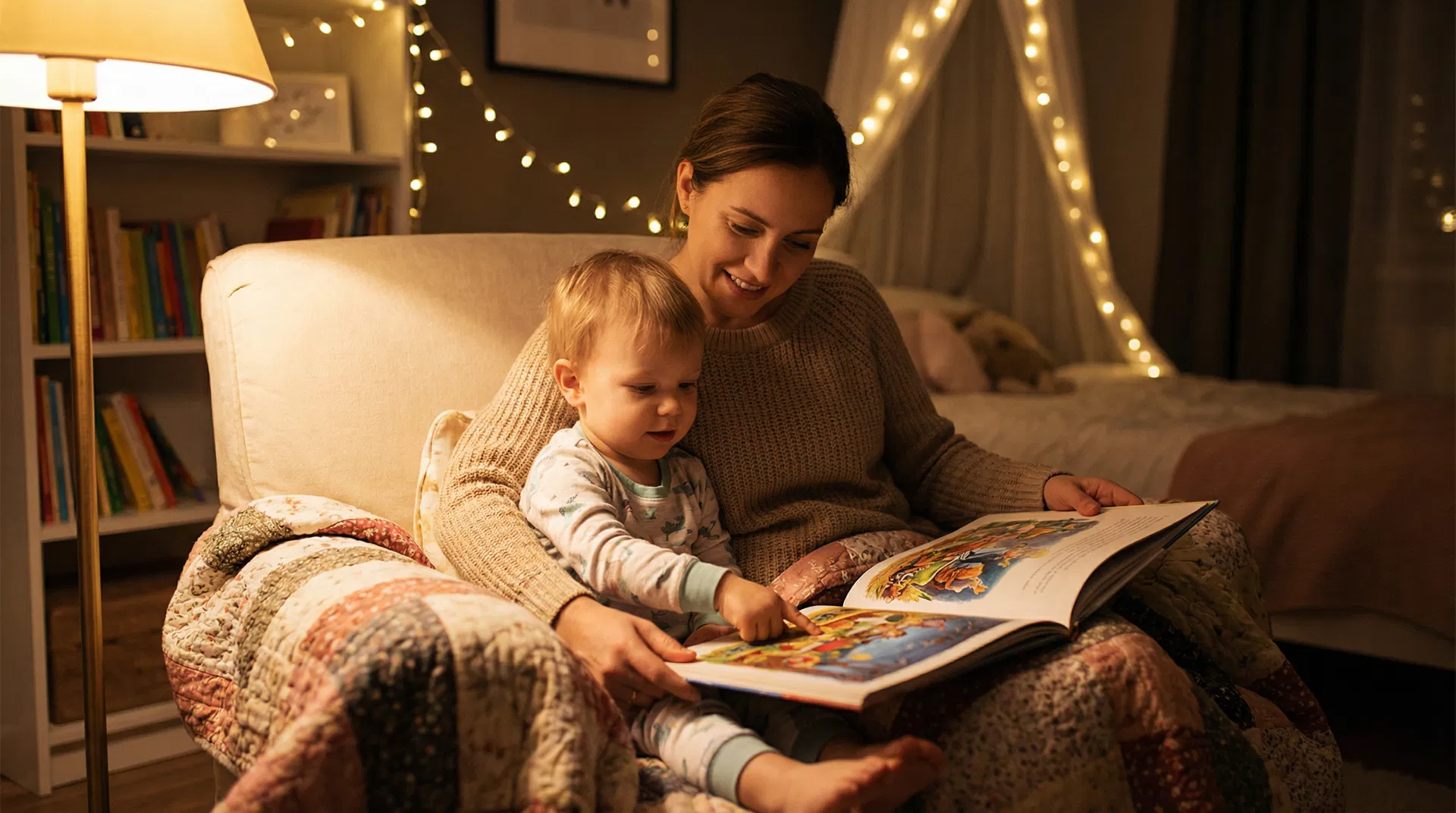
The Science of Baby Sleep Cycles: A Guide for Exhausted Parents
It’s 3 AM. You’re standing by your baby’s crib, eyes gritty with exhaustion, and all you can think is, “Why won’t you just stay asleep?” If this sounds familiar, you are not alone. The fragmented, unpredictable nature of a new baby’s sleep can be one of the most challenging parts of early parenthood. But what if understanding the why behind their wake-ups could empower you to find more rest for your whole family?
The secret isn’t a magic trick; it’s science. Specifically, it’s the science of baby sleep cycles. Unlike adults, who journey through long, predictable sleep patterns, babies experience the world of sleep in a completely different way. Their tiny bodies and rapidly developing brains are on a unique schedule, one that involves short cycles, frequent arousals, and a whole lot of active, twitchy slumber.
Here at RestWell, we believe that knowledge is power. As pediatric sleep experts, we’ve seen firsthand how understanding the architecture of your baby’s sleep can transform frustration into confidence. This guide will walk you through the fascinating science of your baby’s sleep cycles, explain how they evolve, and give you practical, actionable strategies to help everyone in your home get the restorative sleep they need.
What Are Sleep Cycles? A Quick Primer
A sleep cycle is the journey we take through the different stages of sleep. For adults, this journey is about 90-110 minutes long and progresses from light sleep into deep, restorative sleep, and finally into dream sleep (REM). We cycle through these stages multiple times a night.
Babies, however, are built differently. Their sleep cycles are much shorter, and for the first few months, they only have two main stages of sleep: Active Sleep (which is similar to REM) and Quiet Sleep (a form of non-REM deep sleep). A newborn’s sleep cycle is only about 45 to 60 minutes long. This is a biological necessity—these short cycles and frequent arousals ensure they wake up often enough to eat, which is crucial for their survival and rapid growth.
The Two States of Baby Sleep: Active (REM) and Quiet (NREM)
Understanding these two states is the first step to becoming your baby’s sleep detective. What you might interpret as your baby waking up could just be a transition between these stages.
Active Sleep (REM)
If you’ve ever watched your newborn sleep, you’ve seen Active Sleep. This is the stage where they look like they’re on the verge of waking up. You might see:
- Fluttering eyelids
- Twitching fingers and toes
- Irregular, sometimes fast, breathing
- Little smiles, grimaces, or sucking motions
It’s easy to mistake this for light, restless sleep, but it’s actually one of the most important stages for your baby. Newborns spend about 50% of their total sleep time in this stage. Why? Because Active Sleep is brain-building sleep. During this time, their brain is buzzing with activity, forming crucial neural connections, consolidating memories, and processing the massive amount of information they absorb during their waking hours. It is the workshop of brain development.
Quiet Sleep (NREM)
Quiet Sleep is the opposite. This is the deep, restorative sleep you dream of. When your baby is in Quiet Sleep, you’ll notice:
- They are very still
- Their breathing is deep and regular
- They are much harder to wake
This is the stage for physical restoration. During Quiet Sleep, the body releases growth hormones, tissues are repaired, and energy is replenished. It’s the physical “recharge” that helps your baby grow and stay healthy.
How Baby Sleep Cycles Evolve With Age
Your baby’s sleep architecture isn’t static. It matures and changes dramatically over the first couple of years.
Newborns (0-3 Months)
Newborn sleep is a simple, two-stage affair dominated by the need to eat. With sleep cycles lasting only 45-60 minutes, they transition from Active to Quiet sleep and then have a brief arousal period where they are easily woken. This is why they seem to wake up the moment you put them down. They often fall asleep in Active Sleep, and if they sense a change in their environment (like being moved from your arms to a cold bassinet), they will wake right up. Day/night confusion is also completely normal as their internal clock, or circadian rhythm, has not yet developed.
Infants (4-11 Months)
Around 4 months, a major shift occurs. This is often called the "4-month sleep regression [blocked]," but we prefer to call it a progression. Your baby’s sleep is maturing to be more like an adult’s. They begin to cycle through more distinct stages of sleep (light, deep, and REM), and their sleep cycles start to lengthen.
This is a developmental milestone, but it can be disruptive because they now have more periods of light sleep, which means more opportunities to wake up. This is the age where teaching independent sleep skills becomes so effective, as it helps them learn to connect these new, more complex sleep cycles without your help.
Toddlers (1-2 Years)
By the toddler years, sleep cycles are much longer, closer to 60-90 minutes. They spend more time in the deep, restorative stages of sleep and are typically sleeping in longer consolidated stretches at night. Most toddlers will have transitioned to a single, predictable afternoon nap by 18 months. Their circadian rhythm is well-established, and a consistent daily schedule is key to happy sleep.
Age-Based Sleep Needs at a Glance
Here is a quick reference for how sleep needs and patterns change over the first two years. Remember, these are averages, and your child’s individual needs may vary.
| Age | Total Sleep (24 hrs) | Awake Windows | Sleep Cycle Length | Key Characteristics |
|---|---|---|---|---|
| 0-3 Months | 14-17 hours | 45-90 minutes | 45-60 minutes | 2-stage sleep (Active/Quiet). Frequent night wakings for food. |
| 4-6 Months | 12-15 hours | 1.5-2.5 hours | 50-75 minutes | Sleep cycles mature. "4-month progression." More defined stages. |
| 7-12 Months | 11-14 hours | 2.5-3.5 hours | 60-90 minutes | Sleep consolidates at night. Naps become more predictable. |
| 1-2 Years | 11-14 hours | 4-6 hours | 60-90 minutes | Transitions to one nap. Circadian rhythm is fully mature. |
What the Research Says
Our approach is always grounded in science. The field of pediatric sleep is constantly evolving, but several landmark findings guide our understanding of infant sleep.
-
The Importance of REM Sleep: Research has long highlighted that the high proportion of REM (Active) sleep in infancy is critical for the extraordinary brain development occurring during this period. This isn't just "light" sleep; it's essential work. Studies, like those often cited in journals such as Sleep Medicine Reviews, show that this stage is linked to learning, plasticity, and the processing of new experiences. It’s the brain’s own internal simulator.
-
Development of Circadian Rhythms: Researchers like Jodi Mindell have extensively studied the development of the circadian rhythm (the body's internal 24-hour clock). Their work shows that exposure to natural light during the day and darkness at night, along with consistent social cues (like a bedtime routine), are key to helping babies distinguish day from night, which is a cornerstone of sleeping through the night. This process isn't automatic; it’s learned through environmental cues.
-
The "Pause" and Self-Soothing: Studies on behavioral sleep interventions have shown that allowing a brief pause before responding to a baby’s stirring can be highly effective. Research from experts like Dr. Judith Owens and Dr. Harriet Hiscock has demonstrated that when parents wait just a few minutes, babies often return to sleep on their own. This isn’t about ignoring your child, but about giving them the opportunity to practice a critical skill: connecting their sleep cycles independently.
-
Parental Presence and Sleep: A meta-analysis published in Pediatrics has often found that behavioral interventions, including those that involve managing parental presence at bedtime, are effective in improving sleep outcomes without causing long-term stress to the child. The key is consistency and ensuring the child feels safe and loved throughout the process.
Try This Tonight: 5 Steps to Better Sleep
Ready to put this science into action? Here are five practical steps you can take starting today.
-
Create a Consistent Bedtime Routine. A predictable sequence of events (like a bath, putting on pajamas, reading a book, and a final song) is a powerful cue to the brain that sleep is coming. Keep it short (20-30 minutes), calm, and consistent every single night.
-
Optimize the Sleep Environment. Think of it as creating a cave: cool, dark, and quiet. Use blackout curtains to block all light, maintain a room temperature between 68-72°F (20-22°C), and use a white noise machine to mask disruptive household sounds.
-
Watch for Sleepy Cues. Your baby communicates when they are ready for sleep. Don’t wait for them to be overtired and hysterical. Look for early sleepy cues like yawning, rubbing their eyes, staring off into space, or becoming fussy. This is the golden window for putting them down.
-
Practice "The Pause." When you hear your baby stir or fuss in the middle of the night, resist the urge to rush in immediately. Pause for 2-5 minutes (as long as you are comfortable). You might be amazed to see them settle back down on their own as they transition to the next sleep cycle.
-
Master the "Drowsy but Awake" Landing. This is one of the most effective tools for teaching independent sleep. Put your baby down in their crib when they are calm and sleepy, but not fully asleep. This gives them the chance to practice the skill of falling asleep on their own, which is crucial for connecting sleep cycles later.
Common Questions Parents Ask
1. Why does my baby twitch and smile so much in their sleep? This is completely normal! You are seeing Active (REM) sleep in action. This is the brain-building stage, and all that movement is a sign of the intense neural activity happening. Don’t mistake it for them waking up—it’s productive sleep.
2. Is the 4-month sleep regression real? It’s very real, but it’s not a regression! It’s a permanent change in your baby’s sleep architecture as they transition to more adult-like sleep cycles. It’s a sign of healthy development, but it can be rocky because it creates more opportunities to wake up. This is the perfect time to focus on independent sleep skills.
3. When will my baby actually sleep through the night? First, it’s important to define "sleeping through the night." For a young infant, this might mean a 5-6 hour stretch. Most babies are developmentally capable of sleeping longer stretches between 4-6 months of age, but this ability is also a learned skill. With a consistent approach, many babies are sleeping 10-12 hours by 6-9 months.
4. My baby only sleeps for 45 minutes at a time. What am I doing wrong? You are doing nothing wrong! You have a baby who is a master of the one-cycle nap. This is very common. It means they are waking up after a single sleep cycle and haven’t yet learned how to connect to the next one. Focusing on the "Drowsy but Awake" technique and practicing "The Pause" can help them learn this skill.
5. How can I help my baby connect their sleep cycles? The key is consistency. A solid, predictable routine, an optimal sleep environment, and putting them down drowsy but awake are the foundations. When they wake early from a nap or in the night, give them a few minutes to try and resettle on their own before you intervene. This small space is where the magic of learning happens.
Understanding the science behind your baby’s sleep is the first step toward a more rested household. It helps you respond with confidence and empathy, knowing that their seemingly erratic patterns are actually signs of incredible development.
If you’ve tried these strategies and still feel lost in a fog of exhaustion, please know that help is available. At RestWell, RestWell Team and our team of experts create personalized, compassionate sleep plans for families just like yours. We can provide the dedicated support and step-by-step guidance you need to achieve your sleep goals. Visit us to learn more about how we can help your family find its way to restful mornings.
Deep Dive: The Nuances of Sleep Cycle Transitions
One of the most common points of confusion for parents is the moment a baby transitions between sleep cycles. This is often called a "brief arousal" or "partial awakening," and it's a vulnerable point where a full wake-up is likely. In a newborn, this happens every 45-60 minutes. As they get older, this stretches out, but the transition points remain.
What does this look like? Your baby might sigh, stretch, move their head, or even open their eyes for a moment. This is a normal part of the sleep cycle. The critical question is what happens next. A baby with strong independent sleep skills will recognize they are in their familiar sleep space (their crib) and drift into the next cycle. A baby who is accustomed to falling asleep with help (e.g., being rocked, fed, or held) will fully awaken and signal for that same help to get back to sleep. This is because they have a sleep association that they cannot replicate on their own.
Understanding this concept is revolutionary for many parents. The goal is not to eliminate these arousals—they are a biological constant. The goal is to give your child the skills to navigate them independently.
The Role of Sleep Pressure and Circadian Rhythm
Two primary forces govern sleep: sleep pressure and the circadian rhythm.
-
Sleep Pressure (Homeostatic Sleep Drive): Think of this like a balloon that inflates the longer you are awake. The more it inflates, the sleepier you feel. When you sleep, the pressure is released. Naps help release some of this pressure, but it's the long stretch of night sleep that fully deflates it. If a baby's awake window is too short, there isn't enough sleep pressure built up for them to take a long, restorative nap. If it's too long, they become overtired, their bodies produce cortisol (a stress hormone), and it becomes harder for them to fall asleep and stay asleep.
-
Circadian Rhythm (The Body Clock): This is our internal 24-hour clock that tells us when to be awake and when to be asleep. It's regulated primarily by light and darkness. For newborns, this clock is not yet running. It develops over the first few months, guided by environmental cues. This is why exposing your baby to bright, natural light during their awake time and keeping the environment dark for all sleep is so crucial. It sets their clock.
A perfect bedtime is when these two systems align: sleep pressure is high, and the circadian rhythm is signaling that it's time for sleep. This powerful combination makes falling asleep and staying asleep much easier.
Expanding on
RestWell Resources: sleep regression guide [blocked]
Related Articles
Explore more evidence-based sleep guidance from RestWell:
- Understanding Your Newborns Sleep Patterns [blocked]
- How Sleep Develops: Your Newborn (0-3 Months) [blocked]
- How Sleep Develops: The 4-5 Month Transformation [blocked]
- Sleep Regressions Explained: What They Are and How to Survive Them [blocked]
- The Science of Wake Windows: Why Timing Matters More Than Duration [blocked]
References & Further Reading
- Burnham, M.M. et al., "Nighttime sleep-wake patterns and self-soothing from birth to one year of age," J Clin Child Psychol, 2002. Read more
- McGraw, K. et al., "The development of circadian rhythms in a human infant," Sleep, 1999. Read more
- O'Connor, C. et al., "Sleep and infant development in the first year," Pediatric Research, 2026. Read more
- Meltzer, L.J. et al., "Pediatric sleep health: It matters, and so does how we define it," Sleep Medicine Reviews, 2021. Read more