Parent Self-Care [blocked] During Sleep Training: You Can't Pour from an Empty Cup
By RestWell Team, RN, BSN, Certified Pediatric Sleep Consultant
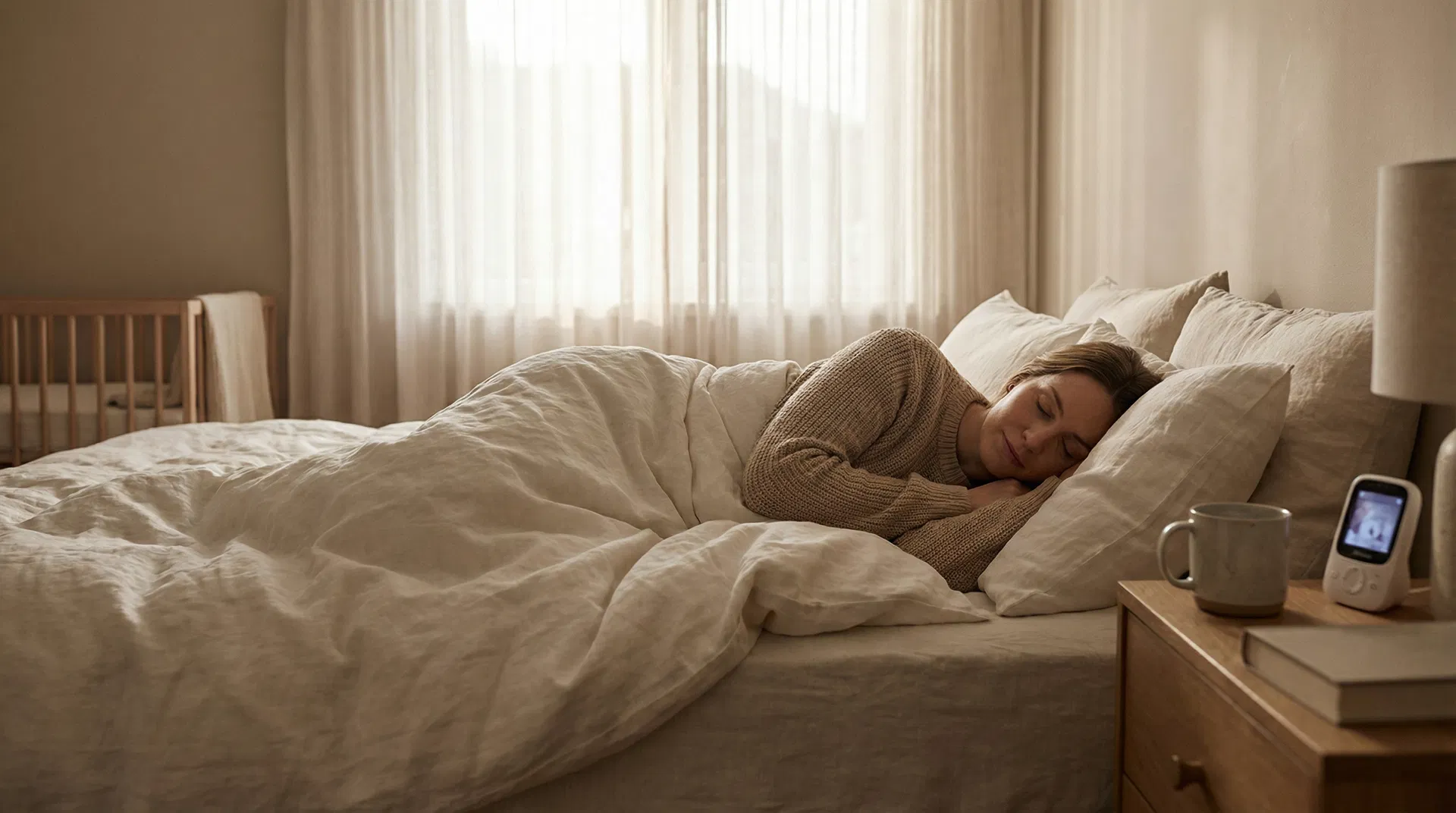
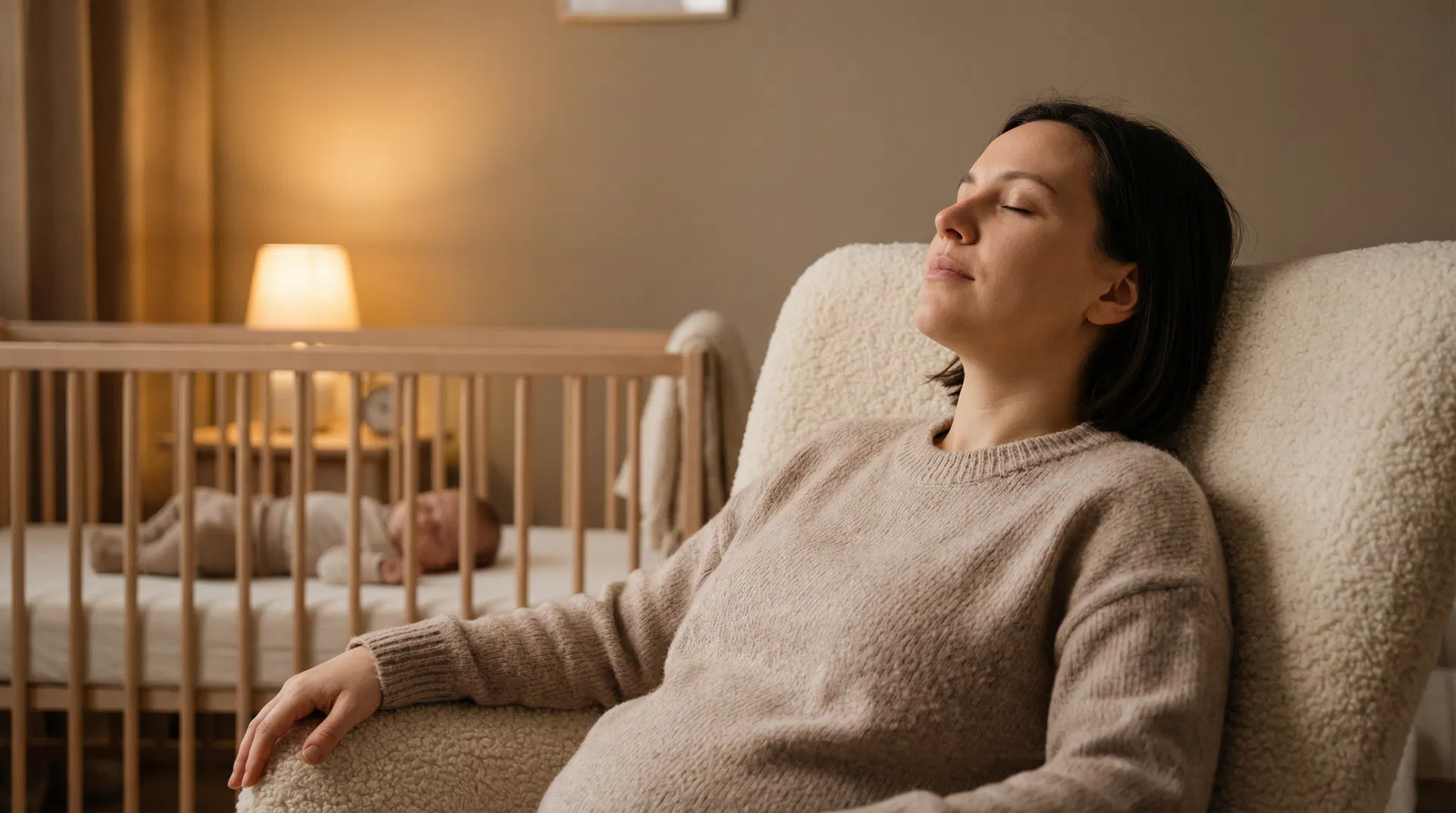
The house is quiet, but it’s a heavy silence, thick with anticipation. You’re staring at a baby monitor, your body coiled like a spring, every nerve ending tingling. Your heart races at every sigh, every rustle. You’re in the trenches of sleep training, and if you’re honest, it feels less like teaching and more like a battle of wills you’re not sure you’re winning. You’re exhausted, touched-out, and your emotional reserves are running on fumes.
If this sounds familiar, you are not alone. Here at RestWell, we’ve walked this path with thousands of families, and we know that sleep training is one of the most challenging—and rewarding—journeys you’ll undertake as a parent. While the focus is naturally on the baby, we want to turn the spotlight back on you, the parent. Because the unspoken truth of sleep training is this: Your well-being is not a luxury; it is a critical component of the process.
Caring for yourself during this intense period isn’t selfish. It’s the very thing that will give you the strength, patience, and resilience to see it through successfully. It’s about filling your own cup so you can continue to pour your love and support into your child. This guide is for you, the tired, dedicated parent. It’s your permission slip to prioritize your own needs, and your roadmap for how to do it.
The Emotional Rollercoaster of Sleep Training
Let's be candid: sleep training can be emotionally brutal. You’re willingly putting your child—and yourself—through a period of discomfort. It’s a process that can dredge up a powerful cocktail of emotions that can feel overwhelming.
- Guilt: This is often the most potent emotion. You might ask yourself, “Am I being cruel? Is this damaging my baby? Am I a bad parent for letting them cry?” This guilt can be especially sharp if you’re feeling pressure from family, friends, or your own internal expectations.
- Anxiety: The constant vigilance, the anticipation of crying, and the uncertainty of the outcome can create a state of high alert. Your nervous system can go into overdrive, making it impossible to relax even when your baby is quiet. You might worry if you’re doing it “right” or if every cry is a sign of a deeper problem.
- Sadness: Hearing your baby cry is biologically programmed to trigger a distress response in you. It’s a primal instinct. It’s okay to feel sad. It’s a testament to the deep bond you share with your child. Acknowledging this sadness, rather than fighting it, is the first step toward managing it.
- Frustration and Anger: When you’re sleep-deprived and your efforts don’t seem to be paying off immediately, frustration can easily boil over. You might feel angry at the process, at your partner, or even at your baby. These feelings are normal, especially when you’re pushed to your physical and emotional limits.
Validating these feelings is crucial. You are not a robot; you are a loving parent navigating a difficult process. The hormonal shifts of the postpartum [blocked] period, combined with profound sleep deprivation, create a physiological state that makes emotional regulation incredibly difficult. Understanding the “why” behind your feelings can help you approach them with compassion instead of judgment.
Why Parent Self-Care is Non-Negotiable
In the world of pediatric sleep, we often talk about co-regulation. This is the process by which a calm and regulated nervous system in a caregiver can help soothe and regulate the nervous system of a child. Your baby is exquisitely attuned to your emotional state. They sense your tension, your anxiety, your calm. When you are grounded and centered, you provide a safe emotional anchor for them in the stormy seas of learning a new skill.
Think of it like being the captain of a ship. If the captain is panicked and frantic during a storm, the crew will feel that fear and chaos will ensue. But if the captain is calm, confident, and steady, the crew will feel reassured and be better able to do their jobs. During sleep training, you are the captain. Your calm presence communicates safety and confidence to your child, even when you’re not in the room. It sends the message: “I know this is hard, but you are safe, you are loved, and you can do this.”
Furthermore, the habits you model now have a lasting impact. By prioritizing your own well-being, you are teaching your child a powerful lesson about healthy coping mechanisms and the importance of self-respect. You are showing them that it’s not only okay but essential to tend to one’s own needs.
Building Your Self-Care Toolkit
Self-care doesn’t have to be elaborate or time-consuming. During sleep training, it’s about finding small, sustainable ways to recharge your batteries throughout the day and during the tough moments at night. It’s about being intentional.
- Mindful Moments and Breathwork: When you feel a wave of anxiety, anchor yourself in the present moment. One of the most effective techniques is “box breathing.” Inhale for a count of four, hold for four, exhale for four, and hold for four. Repeat this several times. This simple act can slow your heart rate and signal to your nervous system that you are safe.
- Nourish to Flourish: Sleep deprivation can wreak havoc on your appetite and cravings. It’s easy to reach for sugar and caffeine for a quick hit of energy, but this often leads to a crash. Focus on nutrient-dense foods—proteins, healthy fats, and complex carbohydrates—to stabilize your blood sugar and mood. And most importantly, hydrate! Dehydration can exacerbate feelings of anxiety and fatigue.
- Lean on Your Village: Now is the time to call in reinforcements. This can be your partner, a family member, or a trusted friend. Communicate your needs clearly. This might sound like, “I need you to take the first check-in tonight,” or “Could you come over for an hour tomorrow so I can take a nap or go for a walk?” Don’t assume people know what you need. Ask for it directly.
- Movement as Medicine: Even a 10-minute walk around the block can do wonders for your mental state. Gentle movement releases endorphins, reduces stress hormones, and helps clear your head. If you can’t get out of the house, try some simple stretches or a short yoga flow in your living room.
Age-Based Sleep Guidelines
Understanding your child's biological sleep needs is a form of self-care, as it helps you set realistic expectations. The table below provides general guidelines; remember that every child is unique.
| Age | Appropriate Wake Window | Total Daytime Sleep (Naps) | Total Nighttime Sleep | Average Total Sleep in 24 Hrs |
|---|---|---|---|---|
| 4-6 Months | 1.5 - 2.5 hours | 3 - 4 hours (3-4 naps) | 10 - 12 hours | 14 - 16 hours |
| 6-9 Months | 2 - 3.5 hours | 2.5 - 3.5 hours (2-3 naps) | 11 - 12 hours | 14 - 15 hours |
| 9-12 Months | 3 - 4 hours | 2 - 3 hours (2 naps) | 11 - 12 hours | 13 - 14 hours |
| 12-18 Months | 4 - 6 hours | 2 - 2.5 hours (1-2 naps) | 11 - 12 hours | 13 - 14 hours |
What the Research Says
It’s easy to get lost in a sea of conflicting opinions online. When doubt creeps in, it can be grounding to look at the scientific consensus. The field of pediatric sleep medicine has been studying the effects of behavioral interventions (the clinical term for sleep training) for decades, and the findings are remarkably consistent and reassuring.
-
Improved Maternal Mental Health: A landmark study by Mindell et al. published in Sleep (2006) found that brief behavioral interventions not only resolved infant sleep problems but also led to significant and sustained improvements in maternal mood. This isn't an isolated finding. A 2016 meta-analysis in Sleep Medicine Reviews confirmed that sleep training consistently reduces symptoms of maternal depression and anxiety.
-
No Evidence of Long-Term Harm: One of the biggest fears parents have is that sleep training will harm their child’s attachment or long-term emotional health. Research has systematically debunked this myth. A prominent randomized controlled trial by Price et al. (2012) published in Pediatrics followed children for five years after they underwent sleep training. The study found absolutely no difference in child-parent attachment, emotional health, or behavioral outcomes between the children who were sleep trained and those who were not.
-
Cortisol Levels and Stress: Some critics claim that letting a baby cry causes a prolonged stress response that is harmful. However, research by Dr. Jodi Mindell and others has shown that while a baby’s cortisol (stress hormone) levels are elevated during the initial nights of crying, they quickly normalize as the baby learns to self-soothe. In fact, chronically sleep-deprived babies often have higher baseline cortisol levels than well-rested babies. Effectively teaching them to sleep can actually reduce their overall stress load.
In short, the scientific literature is clear: sleep training is a safe and effective tool that benefits not only the child's sleep but also the parents' mental and emotional well-being.
Try This Tonight: Your Actionable Self-Care Plan
When you’re in the thick of it, you need concrete, practical strategies. Here are six things you can implement tonight to make the process more manageable.
- The Tag-Team System: If you have a partner, do not try to be a hero. Work as a team. This could mean alternating nights, with one parent being fully “on duty” while the other sleeps with earplugs in a separate room. Or it could mean splitting the night, with one parent handling all check-ins before 1 a.m. and the other handling them after. The key is to have a clear plan before bedtime.
- The 15-Minute Reset: When you feel your frustration mounting, tag your partner or, if you're on your own, make sure your baby is in a safe place (like their crib) and step away for a 15-minute timed break. Go to another part of the house, put on headphones, and do something completely unrelated to the baby. This isn't abandonment; it's a strategic pause to help you regulate your emotions.
- Create a Noise-Canceling Sanctuary: Invest in a good pair of noise-canceling headphones or earplugs. During your “off” periods, or even during the intervals between check-ins, use them. Listen to a guided meditation, an engaging podcast, or calming music. Creating a buffer from the sound of crying can give your nervous system a much-needed break.
- Set Up Your Hydration & Snack Station: Before you start the bedtime routine, prepare a station for yourself. Fill a large water bottle and have some easy-to-eat, healthy snacks on hand (like almonds, a protein bar, or an apple). Staying hydrated and nourished will keep your energy levels more stable throughout the night.
- The Worry Journal: Keep a notebook by your bed. When your mind is racing with anxieties and what-ifs, take five minutes to write them all down. The act of externalizing your worries can make them feel less powerful and can help clear your mind so you can rest during the quiet periods.
- Your Positive Affirmation Loop: Choose a mantra to repeat to yourself during the toughest moments. It could be, “I am giving my child the gift of sleep,” “My baby is safe and loved,” or “We are both capable of doing hard things.” Say it out loud. Write it on a sticky note and put it on the baby monitor. This simple act can reframe your mindset from one of fear to one of empowerment.
Common Questions Parents Ask
1. Is it selfish to focus on myself when my baby is so upset? Not at all. It’s a classic case of putting on your own oxygen mask first. Your baby needs a parent who is present, patient, and emotionally available. You cannot be that parent if you are depleted, anxious, and resentful. Tending to your own needs is one of the most loving things you can do for your child.
2. What if my partner and I disagree on sleep training? This is incredibly common. It’s essential to have a series of calm, open conversations before you begin. Both partners need to be on the same page and commit to the chosen plan for at least one to two weeks. A united front is critical for consistency, which is the key to success. If you can’t agree, it may be a sign to wait or to seek guidance from a neutral third party, like a sleep consultant.
3. I feel so overwhelmed with guilt when my baby cries. How do I cope? First, acknowledge that guilt is a normal part of the process. Then, reframe your perspective. You are not abandoning your child; you are teaching them a valuable life skill. The crying is a protest against change, not a sign of your failure as a parent. Remind yourself of the long-term benefits: a well-rested baby is a happy, thriving baby, and a well-rested family is a healthier, more joyful family.
4. How long will this take? I need a light at the end of the tunnel. While every child is different, most families see a significant improvement within 3-4 nights, and the process is typically complete within one to two weeks. The first few nights are almost always the hardest. Hold on to the knowledge that it gets better, and it usually gets better quickly.
5. I’m a single parent. How can I possibly do this alone? Single parents are superheroes. Sleep training alone is undoubtedly harder, but it is absolutely possible. This is where your village becomes even more critical. Ask a friend or family member to be on “standby” via text for moral support. Have someone drop off a meal. Arrange for a friend to come over for an hour during the day so you can nap. Be extra gentle with yourself and celebrate every small victory.
You Are Not Alone on This Journey
Sleep training is a journey of growth for both you and your child. It will test your patience and resolve, but it will also show you the depth of your own strength. By making self-care a non-negotiable part of your plan, you are not only ensuring your own well-being but also giving your child the greatest chance of success.
Remember, you are a good parent, and you are doing a great job. Be kind to yourself, be patient with the process, and know that restful mornings are on the horizon.
If you’re feeling overwhelmed and would like a dedicated partner to guide you through this process, we’re here to help. RestWell offers personalized, compassionate sleep plans and one-on-one support to help your family get the rest you need and deserve.
RestWell Resources: self-care practices for parents [blocked]
Related Articles
Explore more evidence-based sleep guidance from RestWell:
- Postpartum Sleep Deprivation: A Guide for Parents' Own Recovery [blocked]
- Postpartum Sleep Deprivation: A Nurse's Guide to Surviving and Recovering [blocked]
- The Unseen Toll of Exhaustion: Protecting Your Relationship When Sleep Is a Luxury [blocked]
- Why Am I Awake When the Baby's Asleep? A Guide to Calming Bedtime Anxiety [blocked]
- 5-Minute Self-Care: Realistic Practices for Overwhelmed Parents [blocked]
References & Further Reading
- Witkowska-Zimny, M. et al., "Maternal Sleeping Problems Before and After Childbirth," Int J Environ Res Public Health, 2024. Read more
- Christian, L.M. et al., "Maternal sleep in pregnancy and postpartum: mental, physical, and interpersonal consequences," Current Psychiatry Reports, 2019. Read more
- Price, A.M. et al., "Five-Year Follow-up of Harms and Benefits of Behavioral Infant Sleep Intervention," Pediatrics, 2012. Read more